Play Hazard Dice Game
The medieval ancestor of craps - Call a main, then survive the chance.How to Play Hazard
In a nutshell: The medieval ancestor of craps - Call a main, then survive the chance. You play with 2 dice, it's rated historical, pick your main, and your chances shift with the main you call (5 to 9).
Hazard is where craps began - an English dice game so old that Chaucer's pilgrims argued over it in the 1380s. Unlike craps, YOU choose the crucial number: before rolling, the caster calls a main of 5, 6, 8 or 9. Roll the main and you 'nick' it - an instant even-money win. Roll a 2 or 3 - 'crabs' - and you are thrown out. The 11 always loses against these mains, while the 12 nicks a main of 6 or 8 and loses otherwise. Any other total becomes your chance: from then on the duel is chance against main - roll your chance again before the main shows and you win; the main first and you lose. Every main carries slightly different odds, which is exactly the crooked charm that kept hazard alive for five centuries. Same session stakes as the rest of the site: $500 in free chips, race to $1,000.
Hazard at a glance
| Goal | Double $500 to $1,000 playing the 14th-century game craps came from - call your number, then out-roll it. |
|---|---|
| Dice used | 2 standard dice - 36 combinations per roll |
| Difficulty | Historical, pick your main |
| Odds | Your chances shift with the main you call (5 to 9) |
| Family | Street & Historical |
| Bankroll | Start with $500 in free chips - double up to $1,000 to win the session |
Step by step
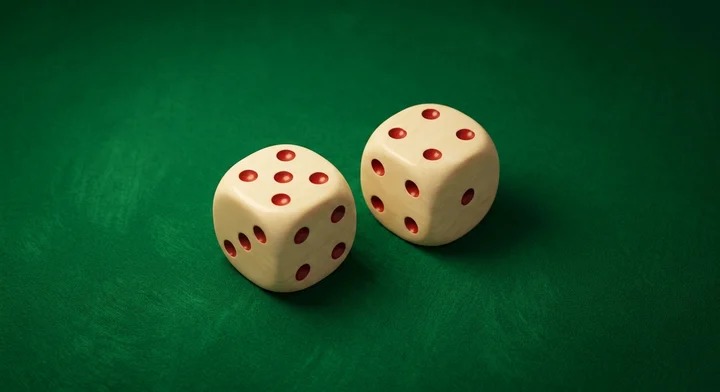
Goal
Double $500 to $1,000 playing the 14th-century game craps came from - call your number, then out-roll it.
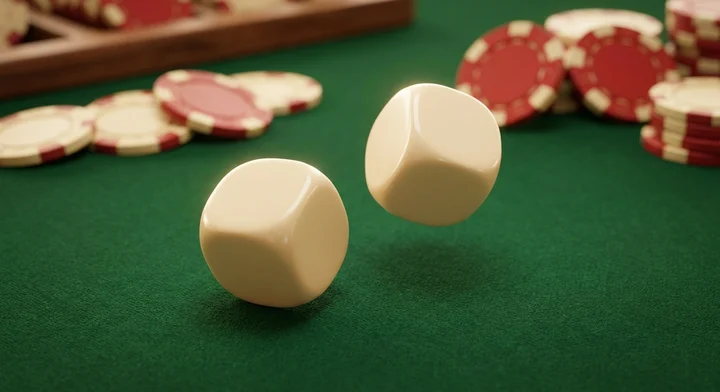
Call your main
Before the first roll, pick your main: 5, 6, 8 or 9. The main is the number you want to nick right now - and the number that hunts you later.
Nicks and outs
Roll the main and you win even money on the spot - a nick. Roll 2 or 3 (crabs) and you are out. An 11 loses against these mains; a 12 nicks only if your main is 6 or 8.
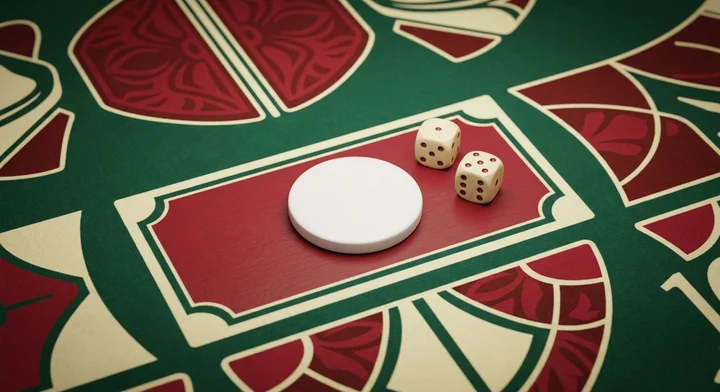
The chance roll
Any other total becomes your chance. The puck flips ON and your stake locks - the round is now chance versus main.
Chase the chance
Roll the chance again before the main appears and you win even money. If the main lands first, the house - as tradition demands - collects.
History of Hazard
Hazard is one of the oldest recorded dice games in Europe - legend traces it to English crusaders besieging the castle of Hazarth in the 12th century, and by the 1380s Chaucer's Canterbury Tales could assume every reader knew it. For centuries it was THE gambling game of English taverns and aristocratic clubs alike, with fortunes lost at White's and Almack's over calls of the main.
Its vocabulary built the modern game: nicks, crabs, the caster, the chance. When Bernard Xavier Philippe de Marigny de Mandeville carried hazard to New Orleans around 1805, players simplified it by fixing the main at 7 - the one call whose odds balanced - and 'crabs' slurred into 'craps'.
Hazard itself faded through the 19th century as its offspring conquered America, but every seven-out and every yo-leven is hazard talking. Craps.now deals the classic mains with free chips so you can play the family tree from the root.
How to Win Hazard: Strategy
💡 Top tip: Call 6 or 8 as your main: the 12 nicks for you, which turns the worst come-out roll in craps into a winner here.
Winning tips, in order of importance
- Learn the nick table cold - which of 11 and 12 helps or hurts is the entire difference between mains.
- Once a chance is set, remember the race is rarely even: a chance of 6 or 8 against a main of 5 or 9 is a race you lead.
- The 2 and 3 are always fatal on the first roll - three ways out of thirty-six, the fixed tax every main pays.
- Mains of 5 and 9 give up both the 11 and 12 - call them for variety, not value.
- Flat bets fit a game with no odds or side bets - your main call is the only strategy lever, so pull it thoughtfully.
- Play a few rounds calling each main and feel why 18th-century gamblers wrote pamphlets about this choice.
Advanced tactics for Hazard
- The caster's disadvantage varies by main - roughly 1.5% on 6 and 8 and steeper elsewhere - which is why sharps always called 6 or 8 and left 5 and 9 to romantics.
- Chance-versus-main is pure ratio math: a chance of 8 (five ways) against a main of 5 (four ways) wins 5/9 of decided rolls - count ways and you know every race.
- The best possible position is chance 6 or 8 against main 5 or 9: you lead five ways to four. The worst is the mirror image.
- A first-roll 4 or 10 chance is a slow grind (three ways each) - expect long rounds and budget the leaderboard clock accordingly.
- Hazard has no field, props or odds to distract you - treat each round as a two-number study and you will out-play its era's average gambler.
- Note what craps fixed: locking the main at 7 (the most frequent total) balanced the game enough for banking - your main call is a tour of why.
- When your rack nears $1,000, switch to the friendliest call (main 6 or 8) and smallest stake that keeps the clock moving - closing discipline wins boards.
Common Hazard mistakes to avoid
- Calling mains at random. Fix: call 6 or 8 - the 12 nicks for you and the follow-up races run friendliest; 5 and 9 give up both the 11 and the 12.
- Forgetting the 11 loses against every main offered here. Fix: burn the nick table into memory before betting - which of 11 and 12 helps is the entire difference between mains.
- Treating every chance race as even money. Fix: count ways - a chance of 6 or 8 against a main of 5 or 9 leads five ways to four, while the mirror position trails.
- Betting big on first rolls because nicks feel common. Fix: the 2 and 3 are always instant outs and the 11 usually is - keep first-roll stakes modest and let chances do the work.
Hazard Variations
Craps
Hazard with the main fixed at 7 - the simplification that conquered the world. The full casino version is our main table.
Chuck-luck hazard (grand hazard)
A later three-dice casino game that borrowed the name but none of the rules - totals under a cage, closer to sic bo than to true hazard.
French hasard
The continental court version, whose bankers formalized odds tables for each main - the first house-edge mathematics in dice.
Street craps
What hazard became on American streets: no called main, pure pass-or-fade. Play it on our Street table.
Crapless craps
A modern echo of hazard's spirit - meddling with which come-out numbers can hurt you. Its own table on this site.
Hazard FAQ
What is hazard?
A medieval English dice game - the direct ancestor of craps. The caster calls a main (5, 6, 8 or 9 here), tries to nick it instantly, and otherwise races a chance number against the main.
What does 'nick' mean?
An instant win on the first roll: the main itself, or a 12 when your main is 6 or 8. The word survives in English as 'in the nick of time'.
What are crabs?
The instant losing throws of 2 and 3 - and almost certainly the word that became 'craps' when the game crossed to New Orleans.
How does the chance work?
Any first-roll total that neither nicks nor throws out becomes your chance. You then win by rolling the chance before the main, and lose if the main comes first.
Which main should I call?
6 or 8 - the 12 nicks for you and the follow-up races run friendliest. Mains of 5 and 9 lose both 11 and 12 on the first roll.
Why isn't 7 a main here?
Classic hazard let the main run from 5 to 9, and craps was born precisely by fixing it at 7. We deal the 5-6-8-9 mains so hazard keeps its own character - the 7-main game is simply craps, one click away.
Is hazard really in Chaucer?
Yes - the Pardoner's Tale rails against 'hasard' as the mother of lies in the 1380s, and the game appears across English literature for centuries after.
How did hazard become craps?
Bernard de Marigny brought it to New Orleans around 1805; the American game fixed the main at 7, dropped the call, and 'crabs' became 'craps'.
What happens on an 11?
Against the mains offered here (5, 6, 8, 9), an 11 on the first roll loses. Historically it nicked only a main of 7 - craps' famous 7-11 come-out is that rule, fossilized.
How do I win a session?
Same as every table: run $500 up to $1,000. The fastest double-ups make the leaderboard.
Is this real money?
No - free virtual chips only. Hazard is here as living history, not gambling.
Is hazard still played anywhere?
Barely - it survives in books, period dramas and sites like this one. English private clubs dealt it into the 19th century before craps and roulette displaced it.
Hazard guides & strategy
- Hazard: the medieval game behind craps
- Where craps comes from
- More craps questions, answered in plain English
Still have a question about Hazard? Browse the full craps FAQ, look up a term like come-out roll or seven-out in the craps glossary, or compare Hazard with the other tables in the rules for every craps game.
Last updated .